Posture Exercises for Seniors (With Pictures)
These posture exercises for seniors use a sturdy chair and a clear stretch of wall. You will roll your shoulders, glide your chin back, squeeze your shoulder blades together and slide your arms up a wall. The whole routine takes about 10 to 15 minutes.
Most of the moves are done seated, and a few are done standing against the wall. Wear loose clothes and choose a chair with no wheels and no armrests. Many people like to do it in the morning, so they start the day standing tall.
2-page PDF, large print, US Letter. Use the Men / Women switch at the top to change the photos.
Who these moves are for
This routine suits adults over 60, 70 or 80 who spend time sitting, reading, driving or looking down at a phone, and who want to stand and sit taller. It works for beginners and for people coming back to exercise. Every move has an easier option, and most can be done from a chair.
The 8 moves
-
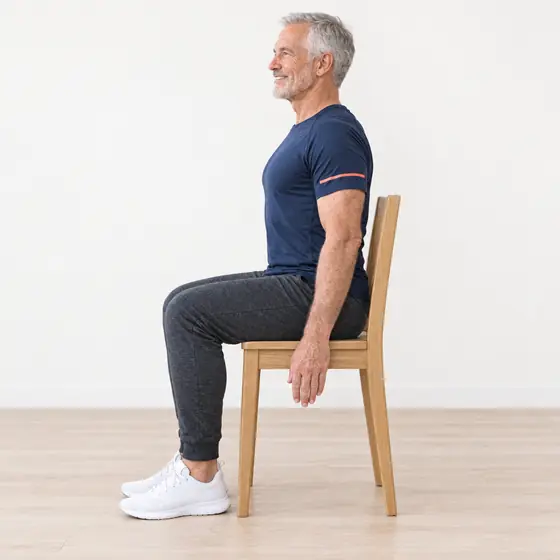
Shoulder Rolls
Warms the shoulders and reminds them to settle down and back, a helpful reset after reading or driving.
- Sit tall, arms relaxed at your sides.
- Lift your shoulders up toward your ears.
- Roll them back and down. Repeat slowly.
- Easier
- Make the circles smaller.
- Harder
- Pause for a breath at the back.
- Coach tip
- Up, back and down.
- Week 1
- 6 reps
-
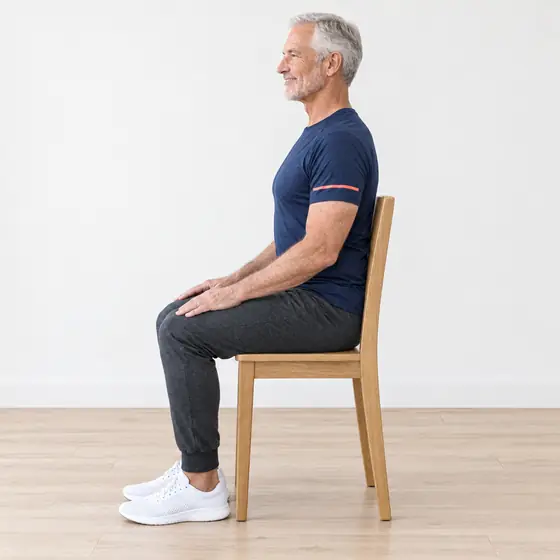
Chin Tucks
Brings the head back over the shoulders, which helps when you spend time looking at a phone, book or screen.
- Sit tall, eyes looking straight ahead.
- Gently glide your chin straight back, like making a double chin.
- Hold for 2 seconds, then relax.
- Easier
- Move only a little.
- Harder
- Hold for 5 seconds.
- Coach tip
- Glide back, don't look down.
- Week 1
- 6 reps
-
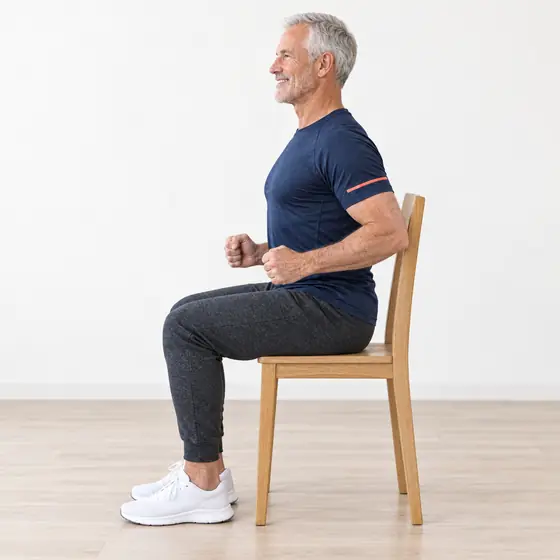
Shoulder Blade Squeeze
Strengthens the muscles between the shoulder blades that help you sit tall at the table without slumping.
- Sit tall, elbows bent at your sides.
- Squeeze your shoulder blades together.
- Hold for 3 seconds, then relax.
- Easier
- Squeeze gently.
- Harder
- Hold for 5 seconds.
- Coach tip
- Shoulders down, not up.
- Week 1
- 6 reps
-
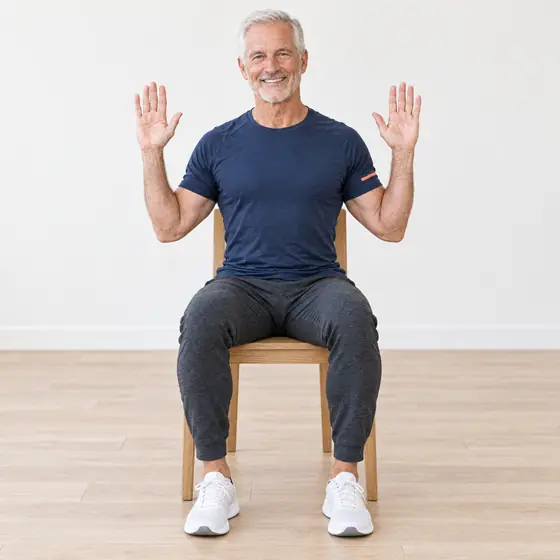
Seated W Pull
Works the upper back in a W shape, building the strength to keep the chest open when you stand and walk.
- Sit tall, arms raised in a W shape, palms forward.
- Pull your elbows down and back.
- Squeeze your upper back, then reach up again.
- Easier
- Keep the arms lower.
- Harder
- Pause 2 seconds at the bottom.
- Coach tip
- Make a proud chest.
- Week 1
- 6 reps
-
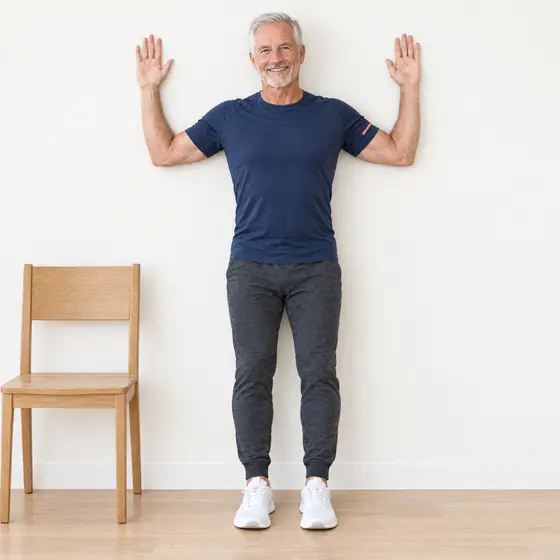
Wall Angels
Trains the shoulders to reach overhead with a straight back, useful for reaching a high kitchen shelf.
- Stand with your back against a wall, feet a little forward.
- Arms in a goalpost shape against the wall.
- Slide them up a little, then back down.
- Easier
- Slide only a short way.
- Harder
- Slide higher, keeping contact.
- Coach tip
- Back of the arms stay near the wall.
- Week 1
- 6 reps
-
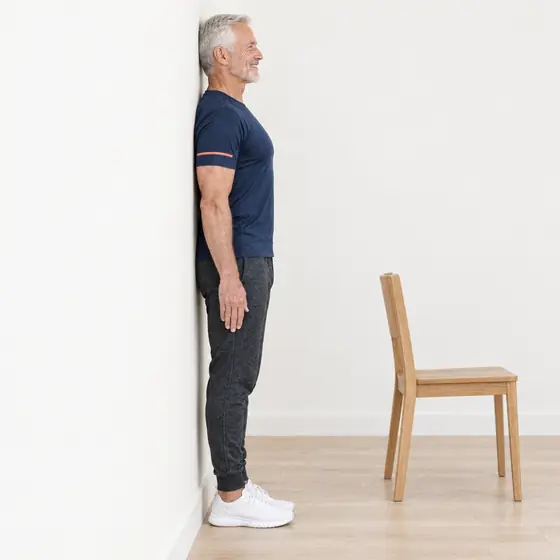
Tall Wall Stand
Practices your whole tall posture at once, with the wall giving clear feedback on where your head and shoulders are.
- Stand with your back against a wall.
- Touch the wall with your bottom, shoulders and head.
- Chin level, breathe and hold.
- Easier
- Let your head stay off the wall.
- Harder
- Add slow arm raises.
- Coach tip
- Tall through the crown of your head.
- Week 1
- hold 10 seconds
-
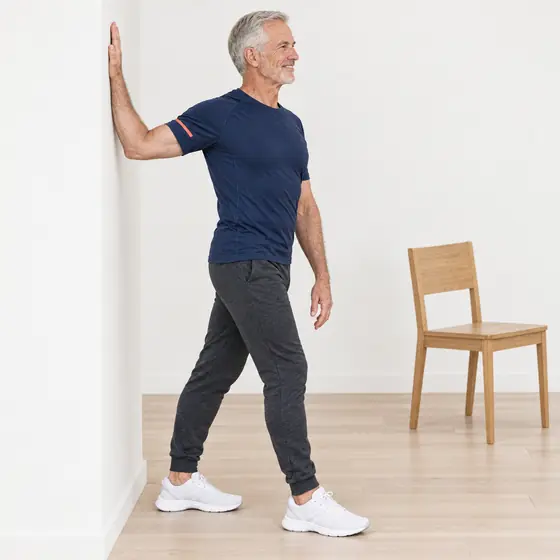
Wall Chest Stretch
Opens the front of the chest and shoulders, which often feel tight after long periods of sitting.
- Stand beside a wall, palm flat on it at shoulder height, arm straight.
- Gently turn your body away from the wall.
- Feel the chest open. Hold, then switch.
- Easier
- Turn only a little.
- Harder
- Place the hand a little higher.
- Coach tip
- Shoulder down and back.
- Week 1
- hold 10 seconds
-
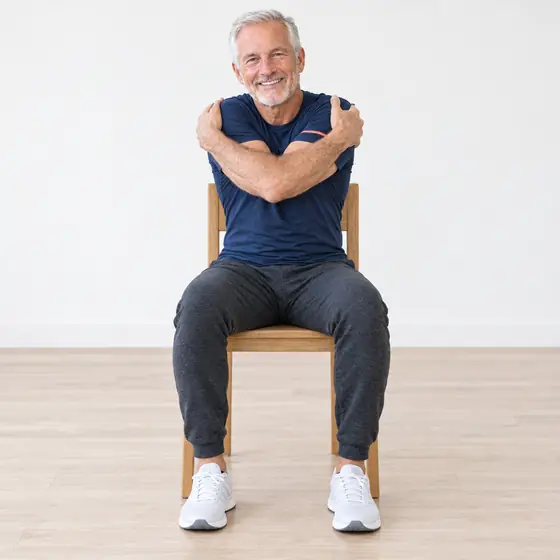
Upper Back Hug
Gently stretches the upper back after the strength moves and helps the shoulders relax before you get up.
- Sit tall and give yourself a big hug.
- Reach your hands toward your shoulder blades.
- Round your upper back and breathe.
- Easier
- Hold your opposite shoulders.
- Harder
- Breathe into the back for 5 breaths.
- Coach tip
- Spread the shoulder blades wide.
- Week 1
- hold 10 seconds
A simple routine to start
In week 1, do the 8 moves as one round, 5 days a week. Do 6 reps of each counted move, and hold the Tall Wall Stand, Wall Chest Stretch and Upper Back Hug for 10 seconds each. Do the chest stretch on both sides. Move slowly and keep every position comfortable.
How to progress over 4 weeks
- Week 2: practice 6 days a week, do 8 reps of each move and hold each stretch for 15 seconds.
- Week 3: practice every day, do 10 reps and hold each stretch for 20 seconds.
- Week 4: practice every day and do the round twice, with 10 reps and 20-second holds.
Stay safe and comfortable
- Use a sturdy chair with no wheels and no armrests, on a non-slip floor.
- Keep every move pain-free. Never force your back or neck into a position.
- During Chin Tucks, glide the head straight back rather than tipping it down.
- If you have osteoporosis, a back condition or recent surgery, ask your doctor or physical therapist which moves suit you.
Posture exercises for seniors over 70 and over 80
For posture exercises for seniors over 70 or over 80, start with the seated moves and the easier options. Make the shoulder rolls smaller, keep the arms lower in the W Pull, and slide your arms only a short way in Wall Angels. In the Tall Wall Stand, let your head stay off the wall if that feels better. Begin with 4 or 5 reps and build from there.
Questions
What is the best exercise for posture in seniors?
The Shoulder Blade Squeeze is a simple, useful one. Sit tall, bend your elbows at your sides and draw them back as you squeeze the shoulder blades together, keeping the shoulders down. It strengthens the upper back muscles that help you sit and stand tall.
Can posture improve after 70?
Yes, the muscles that hold you upright respond to regular practice at any age. Short daily work on the upper back, shoulders and neck can help you sit and stand taller. Steady practice over a few weeks matters more than long sessions.
What are good seated posture exercises?
Chin Tucks, Shoulder Rolls, the Shoulder Blade Squeeze, the Seated W Pull and the Upper Back Hug can all be done from a chair. Sit near the front of a sturdy chair with your feet flat and your back tall, and move slowly.
How long does it take to improve posture?
Many people notice they sit and stand taller within a few weeks of regular practice. A plan that builds from 5 days a week to daily practice over 4 weeks gives the muscles time to adapt. A simple wall test on Day 1 and Day 28 shows your progress.
Is there a printable posture exercise sheet for seniors?
Yes. You can print the 8 moves on this page. The full 28-Day Posture plan is a printable PDF with all 16 moves and photos, a 4-week schedule, a daily tracker and a large-print wall poster.